
Smartwatches for Seniors: Your New Health & Safety Companion in 2025
Introduction: A New Friend on Your Wrist
Imagine having a little friend on your wrist that keeps an eye on your heart, reminds you to take your medications, and even calls your loved ones if you need help — all without lifting a finger. That’s what smartwatches do. They’re not just timepieces; they’re friendly companions and personal guardians designed to bring you and your family peace of mind.
1. What Is a Smartwatch and Why Does It Matter for Seniors?
A smartwatch is designed to assist you, not to confuse you. Here’s what it can do:
Monitor Your Heart: Tracks your heart rate and alerts you if something is off.
Fall Detection: Senses if you fall — God forbid — and automatically notifies your family or emergency services.
Reminders: Notifies you to take your medications or go for a short walk.
Peace of Mind for Family: Your loved ones can monitor your health and activity from afar and feel reassured.
2. Key Features That Make a Difference
You don’t need fancy features. Just make sure the watch has the following:
Fall Detection: A must-have. If you fall, the watch will ask if you’re okay. If there’s no response, it immediately alerts your emergency contacts.
SOS Button: A big, visible button to call for help with one press.
Heart & Step Monitoring: Shows your daily steps and heart rate at a glance. Encourages activity and supports wellness.
Medication Reminders: The watch gently vibrates and gives you a soft sound reminder to take your pills.
Large, Clear Screen: Bright, bold text that’s easy on the eyes.
Long Battery Life: Lasts for days on one charge, reducing the hassle of daily charging.
3. Understanding Your Health Reports
Taking care of your health begins with awareness. Your smartwatch health report is your personal guide to understanding your body better. Don’t worry about the numbers — these reports are your friend, helping you listen to your heartbeat, your steps, and your daily patterns.
Most modern smartwatches generate a daily or weekly health report. While these reports may look complicated at first, they are actually powerful tools once you learn how to read them.
📋 What Does the Health Report Include?
Here’s a breakdown of common terms you’ll see in your smartwatch health report:
| Item | What It Means | What to Watch For |
|---|---|---|
| Heart Rate | Number of beats per minute (BPM) | Normal resting range: 60–100 BPM. If it’s consistently above 100 or below 50 (without exercise), talk to your doctor. |
| Steps | How many steps you walked today | Start with 2,000 steps and increase by 500 each week. Consistency matters more than big numbers. |
| Sleep | Hours and quality of your sleep | Look at balance between deep and light sleep. Quality is more important than hours alone. |
| Blood Oxygen (SpO₂) | Oxygen saturation in your blood | Should usually be above 95%. Frequent drops, especially at night, should be discussed with your doctor. |
| Activity Level | Minutes of movement throughout the day | Try to move regularly, even for a few minutes at a time. |
💡 Tips for Reading Reports Like a Pro:
- Don’t stress if your numbers aren’t perfect every day. Focus on long-term patterns.
- Watch for trends: Is your sleep improving? Are you staying active?
- Listen to gentle reminders like “Time to walk” or “Take a rest” — they’re helpful nudges, not alarms.
- Share your report with your doctor. It gives them a real-life snapshot of your daily health.
📈 Using Your Report With Your Doctor:
- Tell your doctor you’re using a smartwatch for health monitoring.
- Show them charts of your heart rate, steps, or sleep patterns.
- Remember: the smartwatch is a support tool, not a substitute for professional diagnosis.
🌟 Real-Life Story:
Grandma Fatima (72 years old) noticed from her smartwatch reports that her resting heart rate was higher than usual for three consecutive days. She shared the data with her doctor, who adjusted her blood pressure medication in time. The smartwatch helped her catch a problem before it became serious.
🧠 Always Remember:
Your smartwatch doesn’t replace your doctor, but it does give you early signals to help you and your healthcare team make better decisions. Start each day with greater awareness — your health is worth it. 💚
“Heart Rate: 75 bpm”: This means your heart beats 75 times per minute. That’s a healthy, normal range.
“Steps Walked: 3,000”: Great job! Try to add 100 more steps each day. Movement is medicine.
“Sleep: 7 hours”: Well done. That’s a good night’s rest and helps your mind and body recover.
4. Real-Life Stories: How Smartwatches Saved the Day
Grandma Samia (Age 72): She slipped in the bathroom. Her watch detected the fall and called her son immediately. He arrived within 10 minutes. She said, “It could have been a disaster if no one knew.”
Grandpa Abdullah (Age 80): His kids live abroad. His smartwatch shares his step count and heart health with them daily. He said, “I live alone, but they feel close to me.”
Grandma Fatima (Age 75): Suffers from high blood pressure. Her smartwatch’s health data became a helpful daily reference for her doctor, enabling him to adjust her medication accurately.
5. Best Smartwatches for Seniors in 2025
🛒 You can find these watches on Amazon Saudi Arabia or Noon.com, with doorstep delivery.
SeniorSafe Pro Watch:
Features: Large SOS button, accurate fall detection, oversized screen.
Price: ~450 SAR. [Amazon link]
EasyCare Watch 2025:
Features: Strong medication reminders, 5-day battery, easy charging.
Price: ~380 SAR. [Amazon link]
Apple Watch SE with Cellular:
Features: Advanced fall detection, cellular calls without phone, great for tech-savvy users.
Price: ~999 SAR. [Amazon link]
6. How to Choose the Right Watch (5 Easy Tips)
Ease of Use: Choose a watch with large buttons or a simple touchscreen.
Battery Life: Make sure it lasts more than 2 days on a full charge.
Water Resistance: So you can keep it on while washing your hands or making ablution.
Price: Set your budget. There are good choices at every price point.
Support: Choose a brand that offers technical help in your country.
7. Are Your Data Safe? Yes
— If You Choose Wisely Smartwatches collect your steps, heart rate, and sleep data. Reputable brands encrypt this information to protect your privacy.
Tip: Stick with well-known brands to make sure your health data won’t be shared or sold.
- Conclusion: Your Smart Companion for Peace of Mind
Don’t think of it as “complicated” or “not for you.” A smartwatch can be a life-changing gift — for your safety, your comfort, and your connection to those who love you most.
We’re Here to Help
Need help choosing, setting up, or learning how to use your smartwatch? We’re always here. Your comfort is our mission.
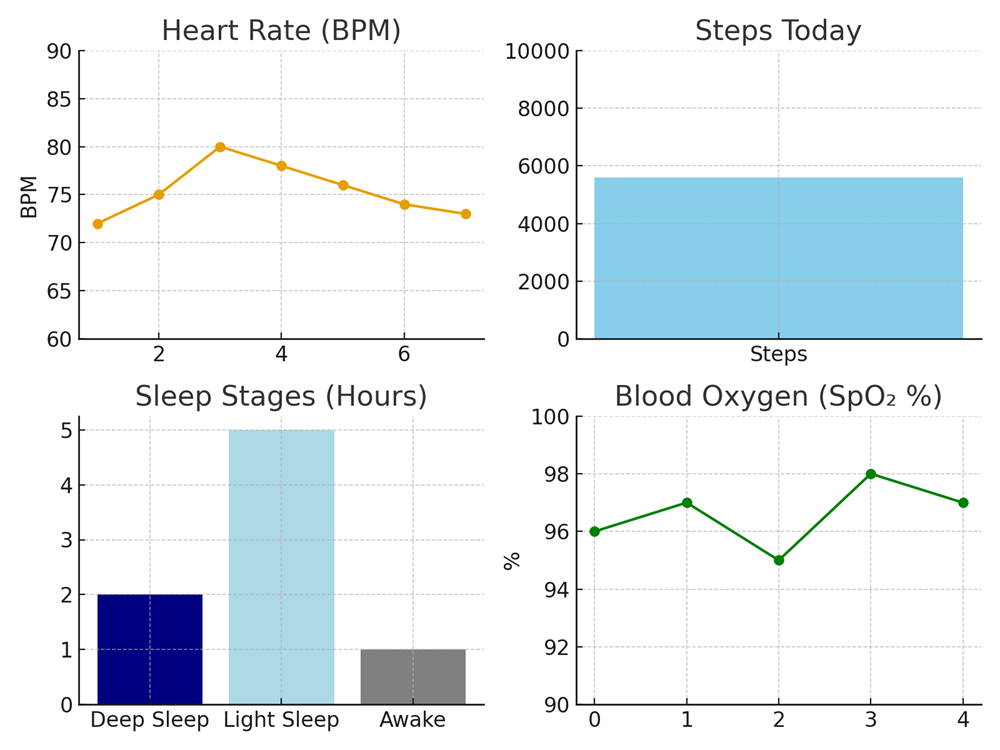
Figure: Example of a smartwatch health report. Charts make health data easier to understand.